Operator review
THATLou: is it worth booking?
The most genuinely different product in the Louvre market. Instead of following a guide, your team hunts objects from clues and scores points. It sounds like a children’s activity and works just as well on adults who have had enough of being talked at.
Written by Claire Benoit Updated
Compare against tours booking now
See live pricesAt a glance
- Format
- Tour agency
- Group size
- Private and small teams
- Price band
- Mid-market
- Where to book
- Direct on thatlou.com
- Website
- thatlou.com
- Found via
- Web search
What actually happens
You are given a set of clues rather than an itinerary. Teams move through the galleries finding the objects those clues describe, photographing them, and scoring points. There is a briefing at the start, a scoreboard at the end, and in between the museum belongs to you.
The design solves a real problem. The Louvre punishes passive visitors — distances are long, the floor plan is confusing, and a guide’s commentary competes with tired legs. A hunt converts both of those liabilities into features. Long corridors become part of the challenge, and the confusing plan becomes the puzzle.
Why it works on adults too
Most people assume this is a children’s product. It is not, and the adult version is arguably the more interesting one.
A conventional tour asks you to receive information. A hunt asks you to look — closely, and at things you would otherwise walk past, because the clue depends on a detail. People consistently report remembering more from a hunt than from a guided tour, which is unsurprising: active recall beats listening, in a museum as anywhere else.
It also handles mixed groups better than anything else on the market. A party containing a twelve-year-old, two art-curious adults and one person who did not want to come at all is a disaster on a three-hour guided tour and works fine as a team.
What you are giving up
Be clear about the trade. You will not get twenty minutes of sustained argument about Caravaggio’s handling of light. The interpretation is lighter by design, because the format is doing something else with your attention.
If your reason for coming to the Louvre is to understand a specific collection, book a specialist instead — Context Travel or an independent art historian. If your reason is to have a genuinely good afternoon in a building that defeats most visitors, this is the better buy.
Practicalities
- Confirm whether museum admission is included, and who books the timed entry slot.
- Ask about the duration — hunts run to a clock, and two hours is the comfortable length.
- Bring a charged phone per team; photography is part of the scoring.
- Use the Carrousel entrance so the team assembles indoors rather than in a queue.
- Book ahead. This is a small operation with limited daily capacity.
What it is good at, and where to be careful
Best for
- Families
- Groups of friends
- Anyone who has already done a conventional tour
Watch for
- It is a game first and an art-history lesson second
- Not the right format if you want sustained commentary
How it compares
Every operator on this site is judged on the same four things: real group size, guide credentials, whether museum admission is included, and how much evidence sits behind the reputation. All thirty operators, ranked into tiers. Every private format compared, with the crossover points.
Booking through a marketplace instead gives you free cancellation up to 24 hours on most products, which agencies rarely match. The platforms these operators sell through. Some links to tours and tickets are affiliate links. If you book through them we may earn a commission, at no extra cost to you. It never changes what we recommend.
Questions people actually ask
What is THATLou?
Treasure Hunt at the Louvre — a Paris operator that turned the museum into a game. Teams work through clues to find objects and score points, instead of following a guide through a commentary. There are themed variants and versions for adults as well as children.
Is THATLou good for adults?
Yes, and that surprises people. It works particularly well for groups of friends, birthdays and anyone who has already done a conventional Louvre tour and found it passive. It is a competitive game in a world-class museum.
Is a treasure hunt a good way to see the Louvre?
It is a good way to enjoy the Louvre and a poor way to study it. You will cover ground, look hard at a dozen objects and remember them. You will not get a sustained art-historical argument. Book it as a second visit, or as the format that makes a first visit fun.
What ages does THATLou suit?
Roughly seven upwards for children, and any age for adults. Younger than about six and the reading and pacing become the parent’s job rather than the child’s game.
Read next
Sources
- THATLou — official site The operator’s own description of its tours and pricing.
- Musée du Louvre Admission prices, opening hours and group access. Checked 26 August 2026.
Photo credits
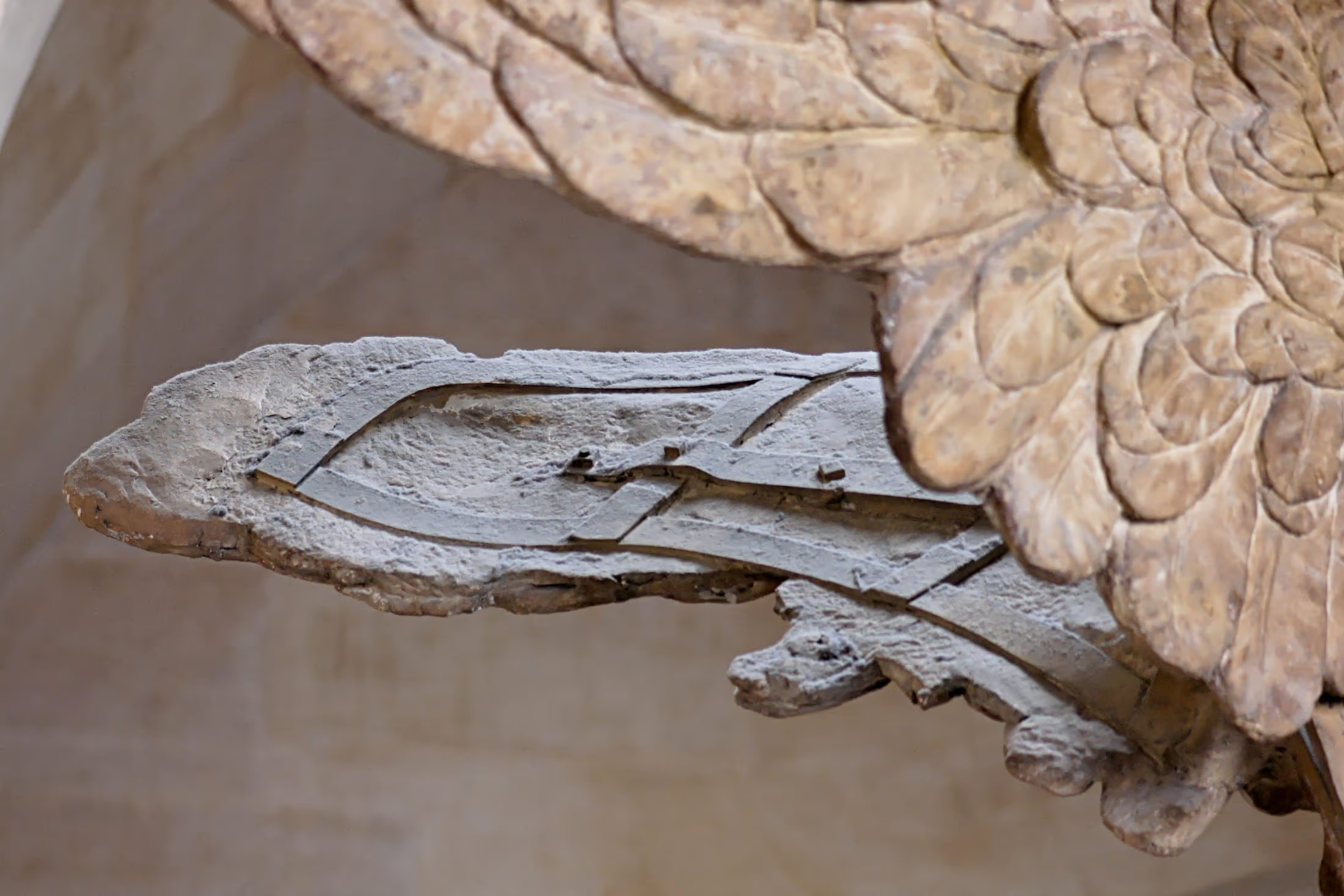
- Wing victory Samothrace Louvre Ma2369 — Unknown artistUnknown artist, Public domain, via Wikimedia Commons
THATLou
- Our shorthand
- Treasure Hunt at the Louvre — the museum as a game, for adults as well as children.
- Best for
- Families
- Watch for
- It is a game first and an art-history lesson second