The collection
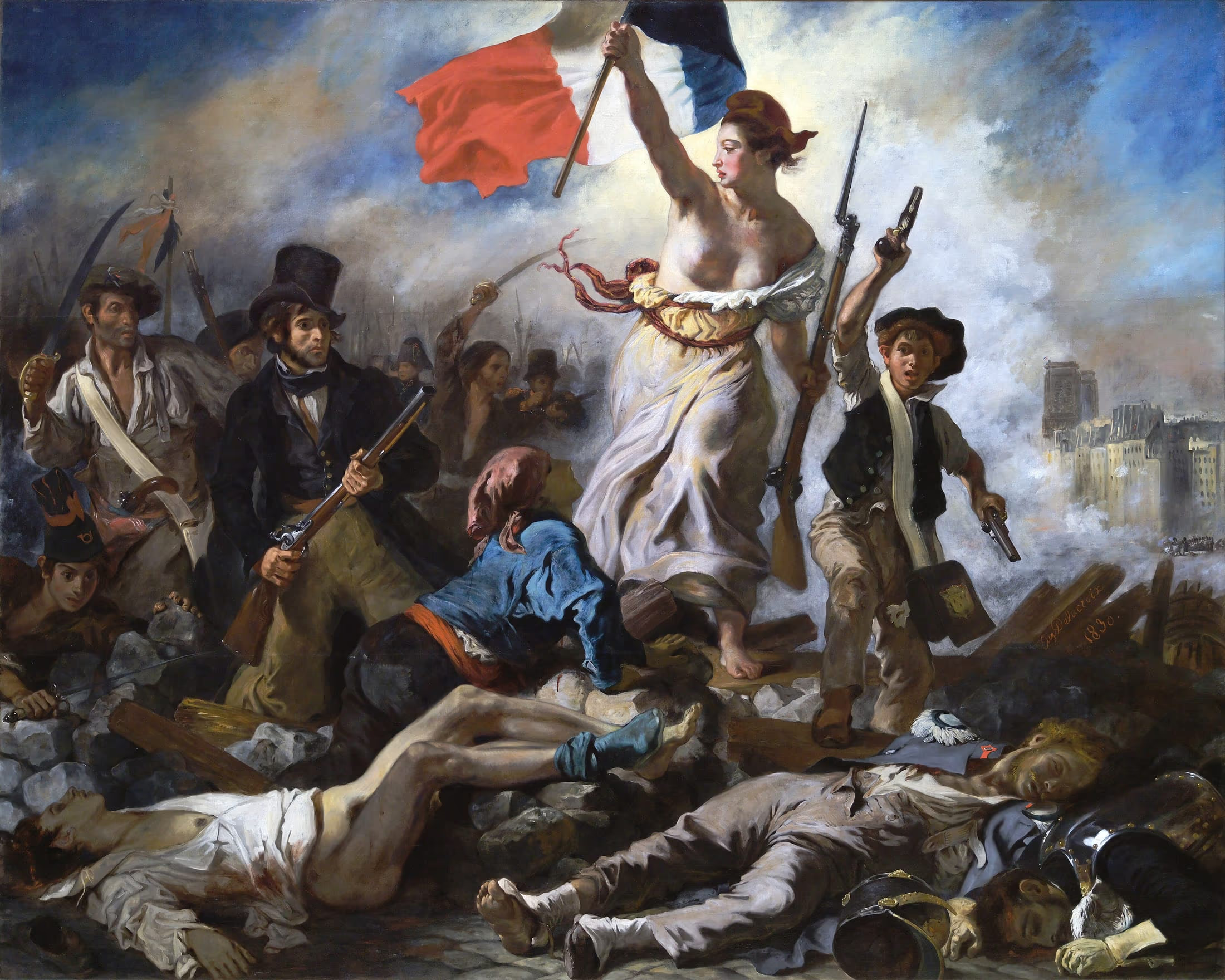
Liberty Leading the People, explained
It is not the French Revolution, the woman is not a portrait, and the barricade is not the one in Les Misérables. Delacroix’s canvas is misidentified more often than any painting in the Louvre — and since its 2024 cleaning it is also one of the most worth standing in front of.
Written by Marc Feuillet Updated
Tours covering the French painting galleries
See live pricesAt a glance
- Artist
- Eugène Delacroix, 1830
- Shows
- The July Revolution, 27–29 July 1830
- Size
- 260 × 325 cm, oil on canvas
- Where
- Denon wing, first floor, French large-format paintings
- Restored
- Major cleaning completed 2024
- Not
- 1789, and not the Les Misérables barricade
Which revolution this actually is
Start here, because most people get it wrong. The painting shows the July Revolution of 1830 — three days at the end of July that the French call les Trois Glorieuses, in which Parisians overthrew the Bourbon king Charles X after he dissolved the newly elected chamber and gagged the press.
It is therefore not:
- Not the French Revolution of 1789. That is forty-one years earlier, and Delacroix was not born until 1798.
- Not the barricade in Les Misérables. Hugo's barricade is the June Rebellion of 1832, two years later — a different, failed uprising. The visual association is so strong that the painting has been used on countless editions and posters of a book it does not depict.
- Not a battle scene in any documentary sense. Delacroix was a witness to the aftermath, not a combatant.
He painted it within months. To his brother he wrote that if he had not fought for his country, he would at least paint for it — and the state bought the canvas in 1831, then found it politically awkward and kept it out of sight for long stretches before it settled permanently in the Louvre.
How to read the picture
The composition is a pyramid with a woman at the apex, and every figure below her is doing political work.
- Liberty. Not a person — an allegory, carrying the tricolour and a bayoneted musket, wearing the Phrygian cap that meant a freed slave in Rome and a revolutionary in France. She acquired the name Marianne as the personification of the Republic.
- The man in the top hat. The bourgeoisie, in formal dress, holding a hunting gun. Popularly called a Delacroix self-portrait; there is no good evidence for that, and the identification distracts from the point, which is that the middle class turned out alongside the workers.
- The boy with pistols. The Paris street, armed and far too young. He is the direct visual ancestor of Hugo’s Gavroche, published two years later.
- The kneeling worker. In a shirt and rough trousers, looking up at Liberty rather than out at the enemy — the moment of belief rather than the moment of fighting.
- The bodies. Painted with a realism the 1831 Salon found offensive: stripped, dirty, sprawled across the foreground. One wears the uniform of the royal guard.
- Notre-Dame, just visible through the smoke on the right, flying the tricolour. It places the scene precisely, in Paris, on the Île de la Cité.
What the 2024 restoration changed
The painting underwent a major cleaning completed in 2024. Layers of discoloured varnish had been flattening it for decades into the brownish image that most reproductions still show.
What is different now:
- The sky is blue. Not brown. The change is startling if you know the old reproductions.
- The smoke reads as smoke, with depth and movement, instead of a flat haze.
- The tricolour is genuinely bright, and its red now rhymes with the red in the kneeling worker’s sash — a colour structure that was invisible before.
- Flesh tones recover, which makes the corpses in the foreground considerably harder to look at. That was the intended effect in 1831.
If your mental image of this painting comes from a school textbook, the object on the wall will not match it. That is the point.
Finding it, and seeing it properly
It hangs on the first floor of the Denon wing, in the galleries of large-format French nineteenth-century painting — the same rooms as Géricault’s Raft of the Medusa and David’s Coronation of Napoleon. Rooms in this part of the museum are periodically renumbered and works do move, so check the day’s plan at the entrance.
Crucially, these rooms are a short walk from the Salle des États but a world away in crowding. Most visitors funnel to the Mona Lisa, photograph it and leave the wing entirely. Ten metres away you can stand in front of a canvas three metres wide, alone, for as long as you like. After 19:00 on a late-opening evening it is one of the best experiences in any museum in Europe.
Why it matters beyond the museum
Few paintings have travelled as far outside their frame. It appeared on the 100-franc note. Its composition is quoted in protest posters, album covers and political cartoons across two centuries, usually by people who could not name the revolution it depicts.
That is a fair measure of what Delacroix achieved. He was asked, in effect, to make an image of a three-day street fight, and produced instead a picture of the idea that people occasionally get up and remove a government — which is why it keeps being reused for events that have nothing to do with 1830.
Tours that reach these rooms
Not every Louvre tour includes the French painting galleries; some stop at the Mona Lisa and turn back. These do go on, checked in August 2026.
-
01
Louvre Museum Tour: Mona Lisa & Iconic Masterpieces
Meets at the Kiosque des Noctambules, not under the pyramid. Runs in English, German, Italian, Spanish and Portuguese.
-
02
Louvre Overview, Exploration Tour and Reserved Entry
The cheapest guided way in, and the most reviewed. The guide orients you and leaves; you keep the museum for the rest of the day.
-
03
Best of the Louvre Guided Tour with Pre-booked Ticket
Highest-rated Louvre tour on the platform with a four-figure review count. Private option available.
Prices checked Aug 2026.
Questions people actually ask
Who painted Liberty Leading the People?
Eugène Delacroix, in 1830. He painted it within months of the events it shows, writing to his brother that if he had not fought for his country he would at least paint for it.
Where is Liberty Leading the People?
In the Louvre, on the first floor of the Denon wing, among the large-format French paintings of the nineteenth century. It hangs a short walk from the Mona Lisa and is vastly easier to see.
What does Liberty Leading the People represent?
The July Revolution of 1830 — three days at the end of July, known in France as les Trois Glorieuses, which overthrew Charles X. It is not the 1789 French Revolution, and it is not the barricade of Les Misérables, which is 1832.
Who is the woman in Liberty Leading the People?
She is not a portrait. She is Liberty herself, an allegorical figure who became identified with Marianne, the personification of the French Republic. The Phrygian cap she wears was the emblem of freed slaves in Rome and of revolutionaries in France.
Why is Liberty bare-breasted?
Because she is a classical allegory rather than a woman on a barricade. Exposed breasts signalled an idealised, antique figure to a nineteenth-century viewer — the same visual language as a Greek goddess. Placing that figure among filthy, realistically painted corpses is precisely what shocked the 1831 Salon.
How big is Liberty Leading the People?
About 2.6 metres tall by 3.25 metres wide — roughly ten times the area of the Mona Lisa. It is designed to be seen from several metres back, and there is usually room to do exactly that.
Was the painting restored?
Yes. It underwent a major cleaning and restoration completed in 2024, which removed discoloured varnish. The sky is bluer, the smoke reads as smoke rather than brown haze, and the tricolour is far brighter than in any reproduction printed before then.
Is the man in the top hat Delacroix?
Probably not, though the claim is repeated constantly. It is a popular identification with no solid evidence behind it. The figure is best read as what he plainly is: the bourgeoisie joining the workers at the barricade, which is the political argument of the painting.
Read next
-
Masterpieces to find
The other works worth crossing the building for.
-
Mona Lisa
Two rooms away, and a completely different kind of visit.
-
Evening & after-hours
The evening slot, when these large canvases empty out.
-
History of the Louvre
How a fortress became a palace and then a museum.
-
Louvre visitor guide
A three-hour route that includes the French painting galleries.
Sources
- Musée du Louvre Room locations, collection information and restoration news. Checked 26 August 2026.
- Louvre collections database Catalogue entry, dimensions, provenance and inventory number.
Photo credits
- French: Le 28 juillet 1830. La Liberté guidant le peuple Liberty Leading the Peopletitle QS:P1476,fr:"Le 28 juillet 1830. La Liberté guidant le peuple "label QS:Lfr,"Le 28 juillet 1830. La Liberté guidant le peuple "label QS:Les,"La Libertad guiando al pueblo"label QS:Lis,"Frelsið leiðir fólkið"label QS:Lms,"Kebebasan Memimpin Rakyat"label QS:Len-gb,"Liberty Leading the People"label QS:Lbg,"Свободата води народа"label QS:Lpcd,"El Libertè dgidant ch' peupe"label QS:Lro,"Libertatea conducând poporul"label QS:Lur,"لوگوں کی قیادت کرتی آزادی"label QS:Lsk,"Sloboda vedie ľud na barikády"label QS:Loc,"La Libertat guidant lo pòble"label QS:Lko,"민중을 이끄는 자유의 여신"label QS:Leo,"Libereco gvidanta la popolon"label QS:Lcs,"Svoboda vede lid na barikády"label QS:Lbn,"লিবার্টি লিডিং দ্যা পিপল"label QS:Lhr,"Sloboda vodi narod"label QS:Lvi,"Nữ thần Tự do dẫn dắt nhân dân"label QS:Llv,"Brīvība uz barikādēm"label QS:Lsr,"Слобода предводи народ"label QS:Lnn,"La Liberté guidant le peuple"label QS:Lnb,"La Liberté guidant le peuple"label QS:Laz,"Azadlığa aparan xalq"label QS:Lckb,"ئازادی گەل بەرەو پێش دەبات"label QS:Len,"Liberty Leading the People"label QS:Lar,"الحرية تقود الشعب"label QS:Lbr,"La liberté guidant le peuple"label QS:Lyue,"自由領導人民"label QS:Lhu,"A Szabadság vezeti a népet"label QS:Lam,"ሕዝቡን የመራች ነፃነት"label QS:Leu,"Askatasuna herria gidatzen"label QS:Last,"La llibertá emponiendo al pueblu"label QS:Lca,"La llibertat guiant el poble"label QS:Lde,"Die Freiheit führt das Volk"label QS:Lce,"Халкъан коьртехь йолу бакъо"label QS:Lsq,"Liria në barrikada"label QS:Lhy,"Ժողովրդին առաջնորդող Ազատությւնը"label QS:Lzh,"自由引导人民"label QS:Lda,"Friheden fører folket på barrikaderne"label QS:Lja,"民衆を導く自由の女神"label QS:Larz,"الحريه تقود الشعب"label QS:Lhe,"החירות מובילה את העם"label QS:Lla,"Libertas populum ducens"label QS:Lwuu,"自由领民"label QS:Lfi,"Vapaus johtaa kansaa"label QS:Lhyw,"Ազատութիւնը ժողովուրդը կ՛առաջնորդէ"label QS:Llfn,"Libria gidante la popla"label QS:Lit,"La Libertà che guida il popolo"label QS:Lht,"Libète k ap dirije pèp la"label QS:Let,"Vabadus viib rahva barrikaadidele"label QS:Lnan,"Chū-iû Lú-sîn ín-léng jîn-bîn"label QS:Lzh-hans,"自由引导人民"label QS:Lru,"Свобода, ведущая народ"label QS:Lmk,"Слободата како го води народот"label QS:Luk,"Свобода, що веде народ"label QS:Lpt,"A Liberdade Guiando o Povo"label QS:Lga,"La Liberté guidant le peuple"label QS:Lbe,"Свабода, якая вядзе народ"label QS:Lcy,"Rhyddid yn arwain y Bobl"label QS:Llt,"Laisvė barikadose"label QS:Lsl,"Svoboda vodi ljudstvo"label QS:Lsh,"Sloboda vodi narod"label QS:Lceb,"Liberty Leading the People"label QS:Lid,"Liberty Memimpin Rakyat"label QS:Lth,"เสรีภาพนำทางประชาชน"label QS:Lpl,"Wolność wiodąca lud na barykady"label QS:Ltr,"Halka Yol Gösteren Özgürlük"label QS:Lnl,"De Vrijheid leidt het volk"label QS:Lfa,"آزادی هدایتگر مردم"label QS:Lsv,"Friheten på barrikaderna"label QS:Lpnb,"ازادی لوکاں نوں راہ دسن والی"label QS:Ltt,"Халыкны әйдәүче Азатлык"label QS:Lgl,"A liberdade guiando o pobo"label QS:Lel,"Η Ελευθερία οδηγεί το Λαό"label QS:Lcv,"Халăха йыхравлакан ирĕклĕх" — Eugène Delacroix, Public domain, via Wikimedia Commons
- Grande Galerie, Louvre Museum, 25 September 2019 01 — Cheng-en Cheng from Taichung City, Taiwan, CC BY-SA 2.0, via Wikimedia Commons
Seeing it well
- Best time
- After 19:00 on a late night
- Stand back
- 4–5 metres. It was painted for distance.
- Nearby
- Géricault, Raft of the Medusa
- Also nearby
- David, Coronation of Napoleon